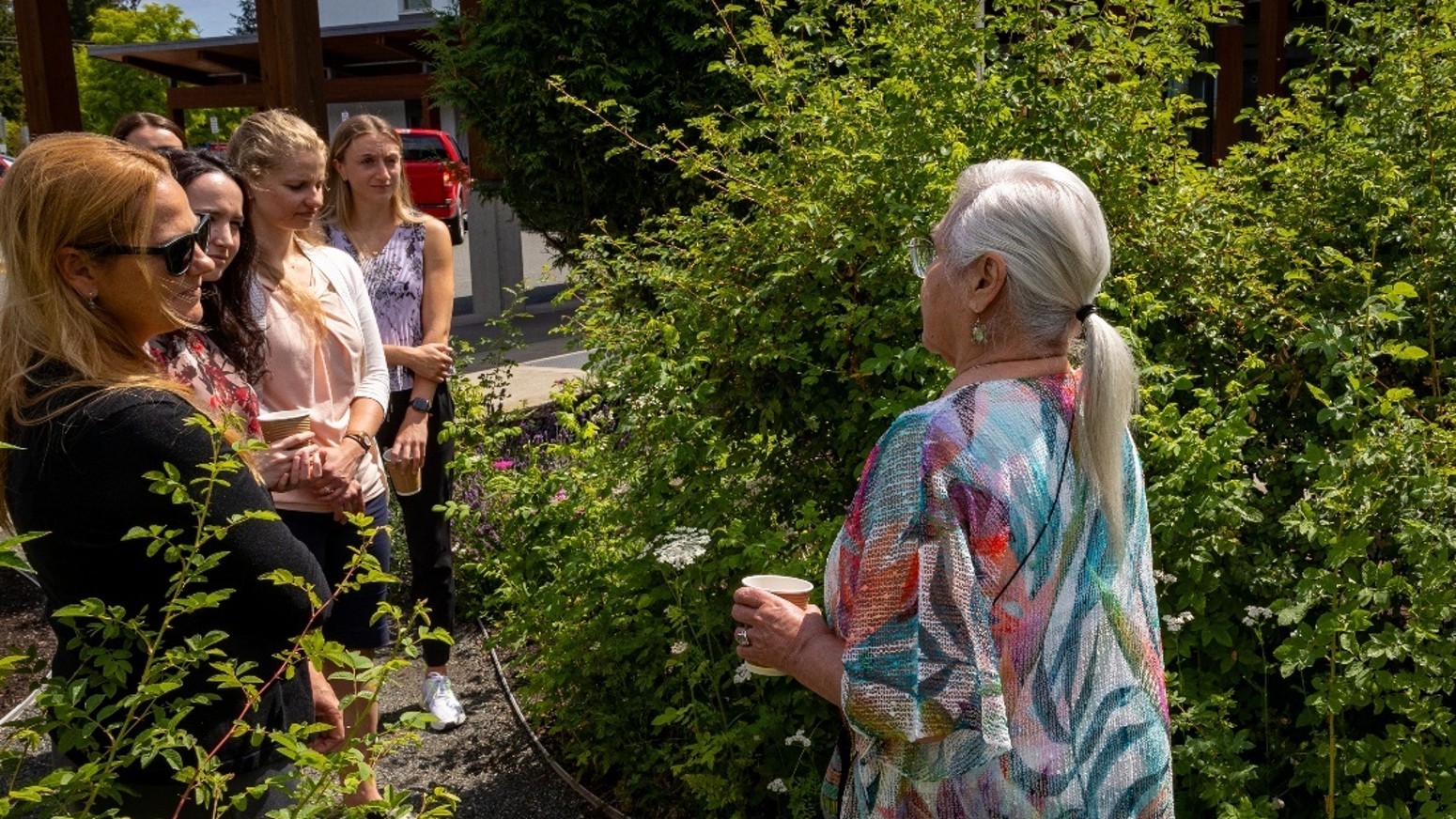
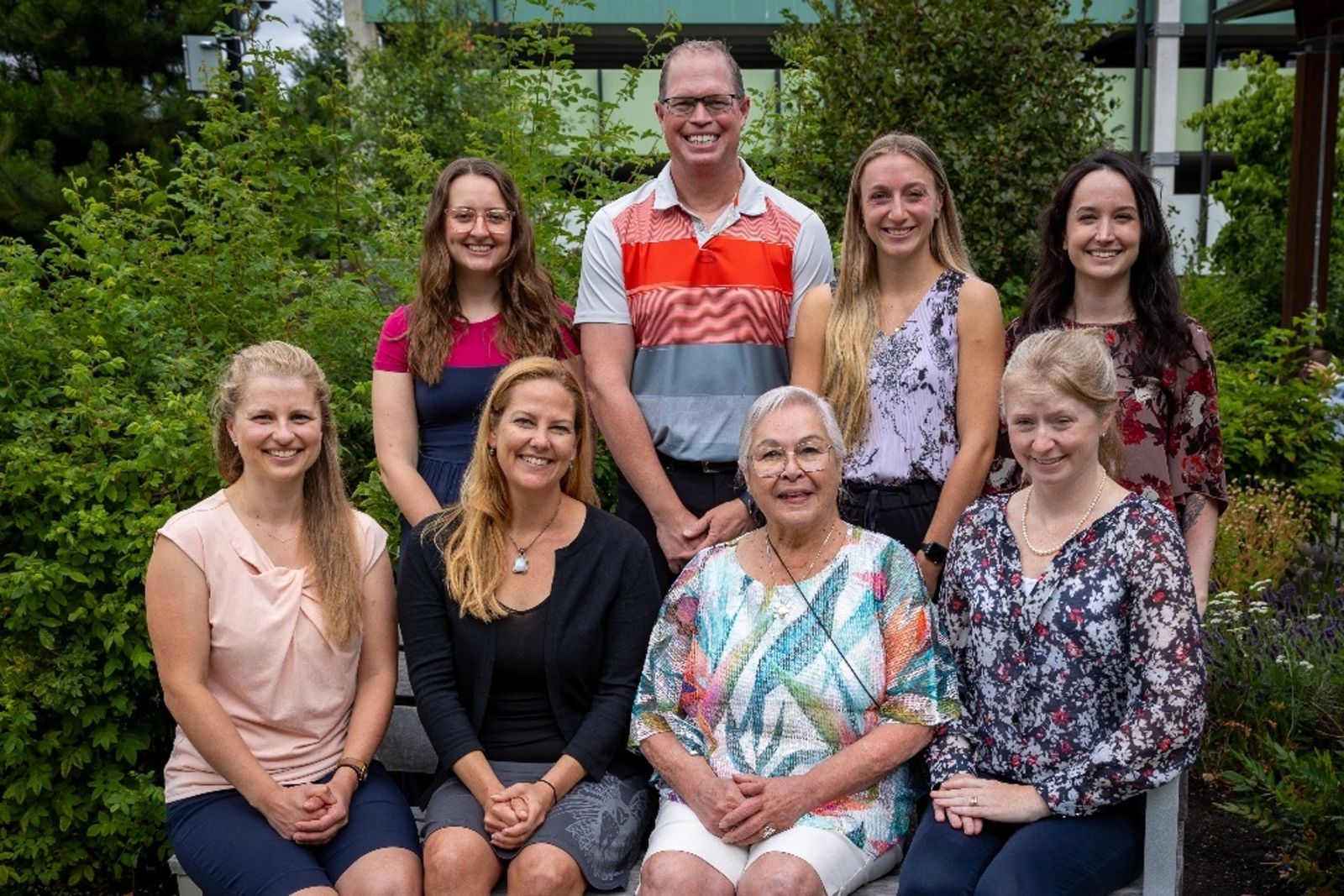
Elder Barb Whyte (right) leads the project team (left) through the Comox Valley Hospital Gardens. Photo: Island Health.
Plants are a vital part of Indigenous traditional medicine. Since time immemorial, Indigenous Peoples have used plants to treat illness and maintain their wellbeing.
But how can Indigenous traditional medicines be used safely in combination with Western medicines? It is a critical gap in pharmacy education, one that can impact patient safety and access to medicines. Better training — shaped by and with Indigenous Peoples — is needed to support pharmacists and pharmacy technicians in providing culturally safe care.
Elder Barb (Billy) Whyte, a respected member of the K’ómoks First Nation and descendant of the Pentlatch People, wants to bridge this knowledge gap. A retired nurse and traditional Knowledge Keeper, Elder Barb worked in healthcare for 48 years, where she advocated for the use of food and plants as medicine. She was the driving force behind the All Nations Healing Room and traditional medicine garden at Comox Valley Hospital, Canada’s first hospital-based garden of its kind.
Elder Barb’s passion for this work is grounded in tradition. She comes from a hunter-gatherer family with Chiefs’ lineage on both sides, where knowledge of Indigenous medicines was passed on by her grandparents.
“Plants for medicine and food for medicine are important to me because they are the foundation of health for maintaining wellness, preventing disease, and supporting a healthy body,” says Elder Barb. “Understanding how we metabolize plants and foods as medicine helps support patients when they are also taking Western medicines, by recognizing potential contraindications.”
“Traditional Indigenous plant-based foods for medicines have been used safely by generations of Indigenous Peoples and have minimal costs,” shares Elder Barb. “These teachings remind us that health starts with balance, respect, and our relationship with the land.”
To explore this work in the local health system, Elder Barb reached out to Island Health and the BC SUPPORT Unit’s Island Centre team, which is embedded in Island Health’s Research Department. She had a long-standing, strong relationship with the Research Department from other projects, and shared her idea for plant-based medicine workshops with Cindy Trytten, Island Health’s Director of Research Partnerships and Knowledge Mobilization.
The Island Centre team connected Elder Barb with Island Health’s Manager, Clinical Pharmacy Services, and together they launched a pharmacy residency research project called Pharmacy Learning About INdigenous Traditional (PLANT) Medicines, which was funded by the BC SUPPORT Unit and led by then-resident Dr. Olivia Burton.
What is a contraindication?
A contraindication is a reason why someone should not take a certain medicine or treatment, because it might cause harm. This could happen because two medicines conflict or interact with each other in ways that are harmful instead of helpful.
Why does it matter?
Pharmacists and people receiving care need to know when medicines – no matter if they use a Western or traditional approach – could interact with each other in a harmful way.
That’s why education for pharmacists on plant-based medicines is so important. People should be aware of any risks or side effects that might occur when multiple different treatments are used together.
As part of this, Elder Barb led and delivered in-person workshops to pharmacy staff in the Island Health region, with support from the Island Centre team. Pharmacists received practical guidance on supporting patients who use both traditional Indigenous and Western medicines. They also received a reference tool that was developed to honour and respect sacred Indigenous knowledge, created by the team.
The impact of the workshops was clear: pharmacists showed a significant improvement in both knowledge and confidence about traditional Indigenous medicines, along with a deeper appreciation for Indigenous worldviews and healing practices.
Pharmacists noted the value of learning directly from an Elder. Participants described the experience as “a spectacular opportunity that should be made available to all” and “a fabulous learning experience that opened my mind to wanting to learn more.”
Elder Barb’s approach to working with patients was especially impactful.
“It was really helpful to witness the patient interview by Elder Barb and to try to model that style of information gathering,” said one participant.
“It has been an honour to connect Elder Barb with the pharmacy team at Island Health and to support this innovative and transformative project,” says Heather Strosher, Knowledge Broker with the Island Centre, BC SUPPORT Unit.
The PLANT Medicines project has addressed a critical gap by ensuring traditional medicines and practices are respectfully considered when pharmacists and pharmacy technicians are educating and caring for patients.
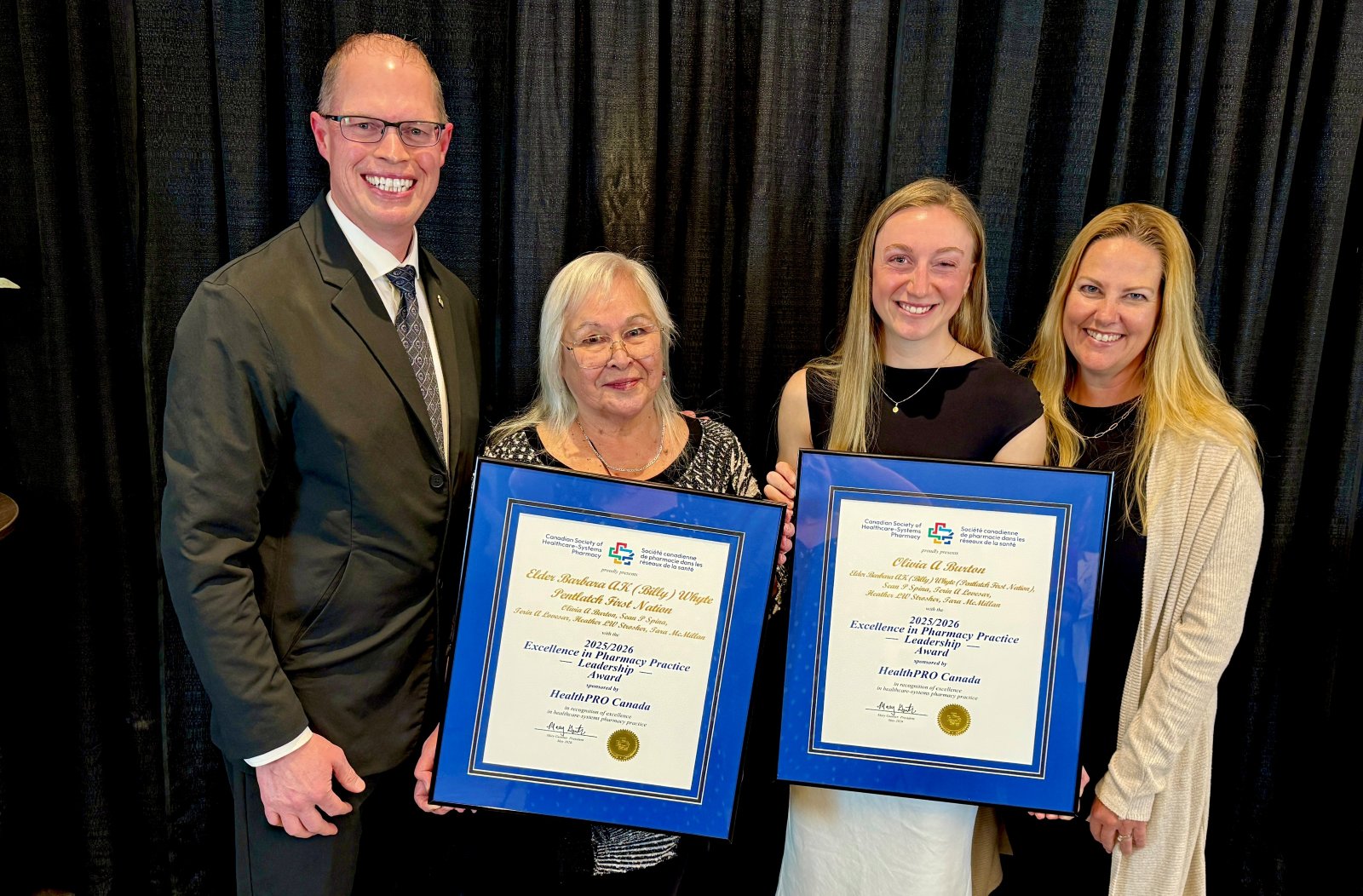
Since its launch in 2024, the project has received provincial and national recognition. It received a 2025 Health Employers Association of BC Award of Merit in Leading Practices for Diversity, Equity, and Inclusion. In September 2025, the team presented their work at the Indigenous Pharmacy Professionals of Canada Symposium. And in May, the team accepted an Excellence in Pharmacy Practice Leadership Award from the Canadian Society of Healthcare-Systems Pharmacy.
Elder Barb hopes to provide more workshops to a wider group of pharmacy professionals. The team has also submitted a manuscript to the Canadian Pharmacists Journal to share their learnings nationally.
The BC SUPPORT Unit, part of Michael Smith Health Research BC, is a provincial initiative that empowers research and care teams to collaborate with a patient-oriented research approach. It moves evidence developed with patients and communities into practice. The Island Centre, BC SUPPORT Unit, connects care providers and decision-makers at Island Health with the region’s academic, patient, and community partners.
The PLANT Medicines project was led by pharmacist Dr. Olivia Burton during her residency year, supervised by Dr. Sean Spina, Regional Manager of Clinical Pharmacy Services at Island Health. Team members included Indigenous Care Pharmacist Terin Lovesar, along with Heather Strosher and Tara McMillan from the Island Centre.
About the BC SUPPORT Unit
The BC SUPPORT Unit is part of Canada’s Strategy for Patient-Oriented Research (SPOR), bringing together patients, researchers, health professionals, and health system leaders to create research that matters most to patients. Funded by the Canadian Institutes for Health Research and the Province of British Columbia, the BC SUPPORT Unit supports collaboration and the meaningful integration of research evidence into practice to improve health outcomes.
Stay informed
Subscribe to our newsletter and follow us on LinkedIn and Bluesky.