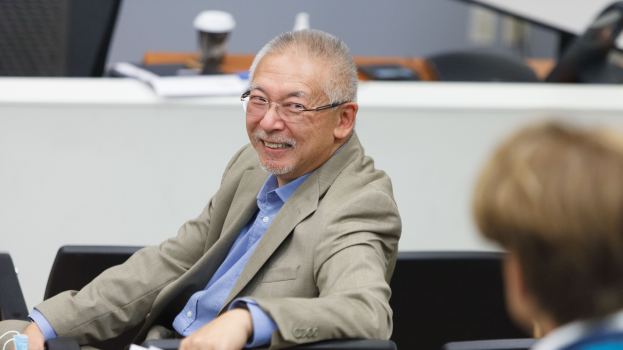
Dr. Antoine Boivin is a family doctor in Montreal. He is a keynote speaker at the upcoming Putting Patients First conference in March. Ahead of the conference, Antoine shares how his clinic integrates people with lived experience into primary care teams.
A peer acts as a guide for people dealing with complex health and social challenges. Peers have been part of Antoine’s healthcare team for 10 years. He says patients coming to his clinic feel better understood, and his team can find real solutions to life challenges that affect people’s health.
Q: How has the peer role on your family medicine team changed how you deliver healthcare?
I work closely with a colleague who has deep lived experience as a patient. She has been accompanying other patients on their journey for the past 60 years.
When we first met, we asked ourselves a question — what would happen if a fellow patient cared for people alongside a doctor? So, we tried it.
To me, the impacts were striking.
She was hearing things that I wasn’t. She could understand the bigger issues that explain why someone is unwell. She helped connect people to stable housing, to family therapy, or to resources for escaping abuse or violence. When we addressed those, we saw major improvements in patients’ health.
Having a peer in the room acted as a third set of ears and helped us find more effective solutions.
Q: How did this approach change you as a healthcare professional?
As healthcare professionals, we’re trained to listen to symptoms and diagnose illnesses. We often see patients as vulnerable or facing challenges. There’s this idea that we’re the ones with knowledge, and we need to explain things to them.
But now I see things differently. A patient with a long-term illness who’s survived major challenges has lots of knowledge. They have strength and the ability to cope with hard situations.
It brought me back to a human being working with other human beings.
Q: You also look at how to involve patients in health research to find better treatments than those available today. What does involving patients in research mean to you?
We’re moving from doing research on patients to research with patients. We’re recognizing that patients are people with knowledge complementary to ours. And they can be equal partners in discovery.
Being a patient, it starts with a question: what’s wrong with me? What’s happening? That’s the beginning of a search for answers.
We all have a natural instinct to ask questions. We reflect and adapt our practices based on what we learn. That is the foundation of a shared quest for new knowledge.
Q: In March, you’re speaking at the Putting Patients First conference. What do you hope people will remember?
I want us to reflect on collective action for change.
What actions are taken based on what patients express? What are we doing to make room for people who are left behind?
We’re living in a pretty dark place in history. There is a level of despair, distress, and hopelessness. We’re faced with challenges that appear bigger than us. Wars, governments becoming more controlling, climate change. In healthcare, the system is strained. There are challenges accessing health professionals, a lack of trust, and plenty of misleading health information on social media.
What drives me is hope rooted in reality. I have a deep trust that under our differences there are core things that connect us. I also trust in our ability to transform things for the better together.
Dr. Antoine Boivin is a family doctor in Montreal. He holds the Canada Research Chair in Partnership with Patients and Communities. He is also the Co-Founder of the Centre of Excellence on Partnership with Patients and the Public.
Antoine is a keynote speaker at the upcoming Putting Patients First conference in Vancouver on March 3, 2026, hosted by the BC SUPPORT Unit. The conference is free to attend – explore the event program.