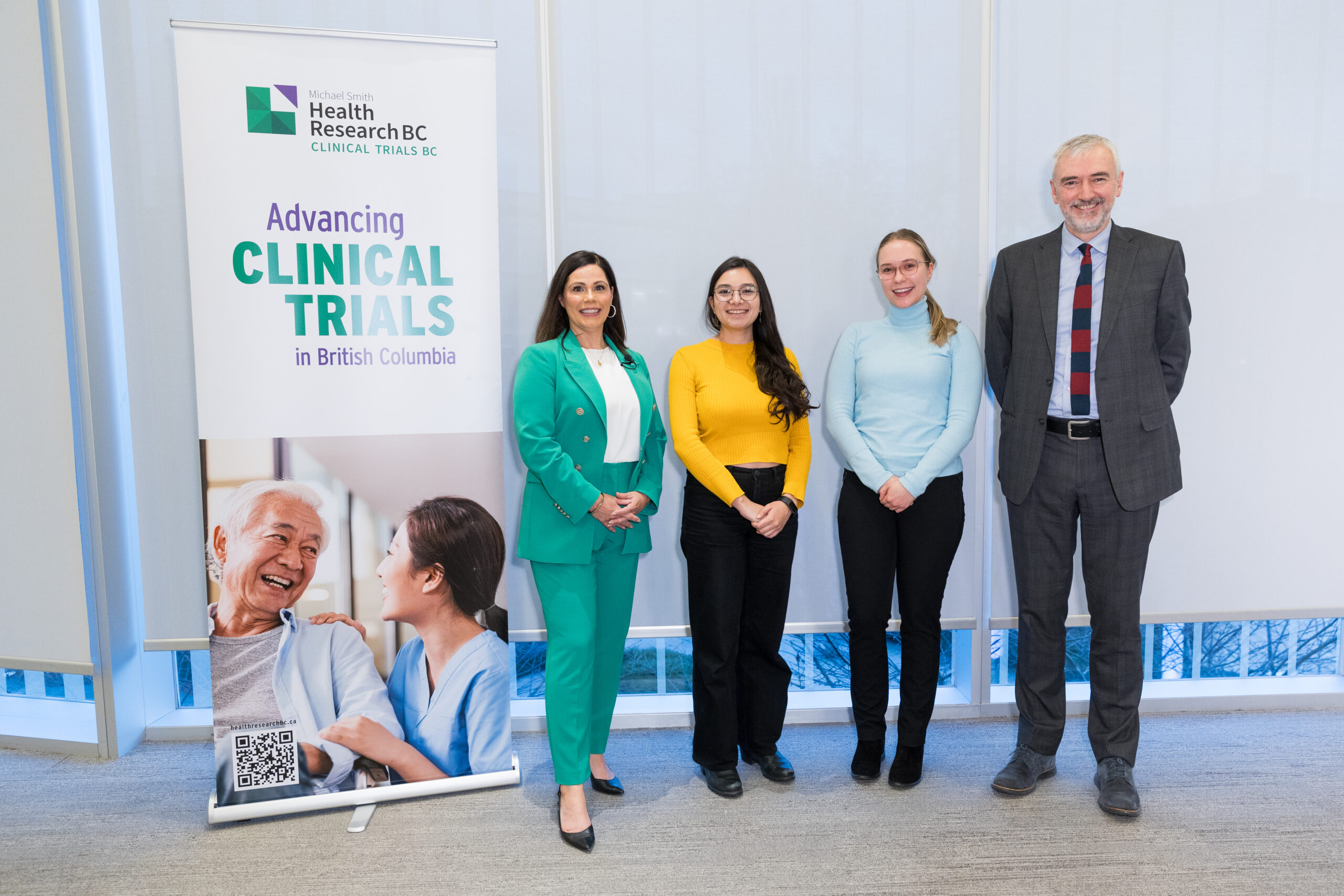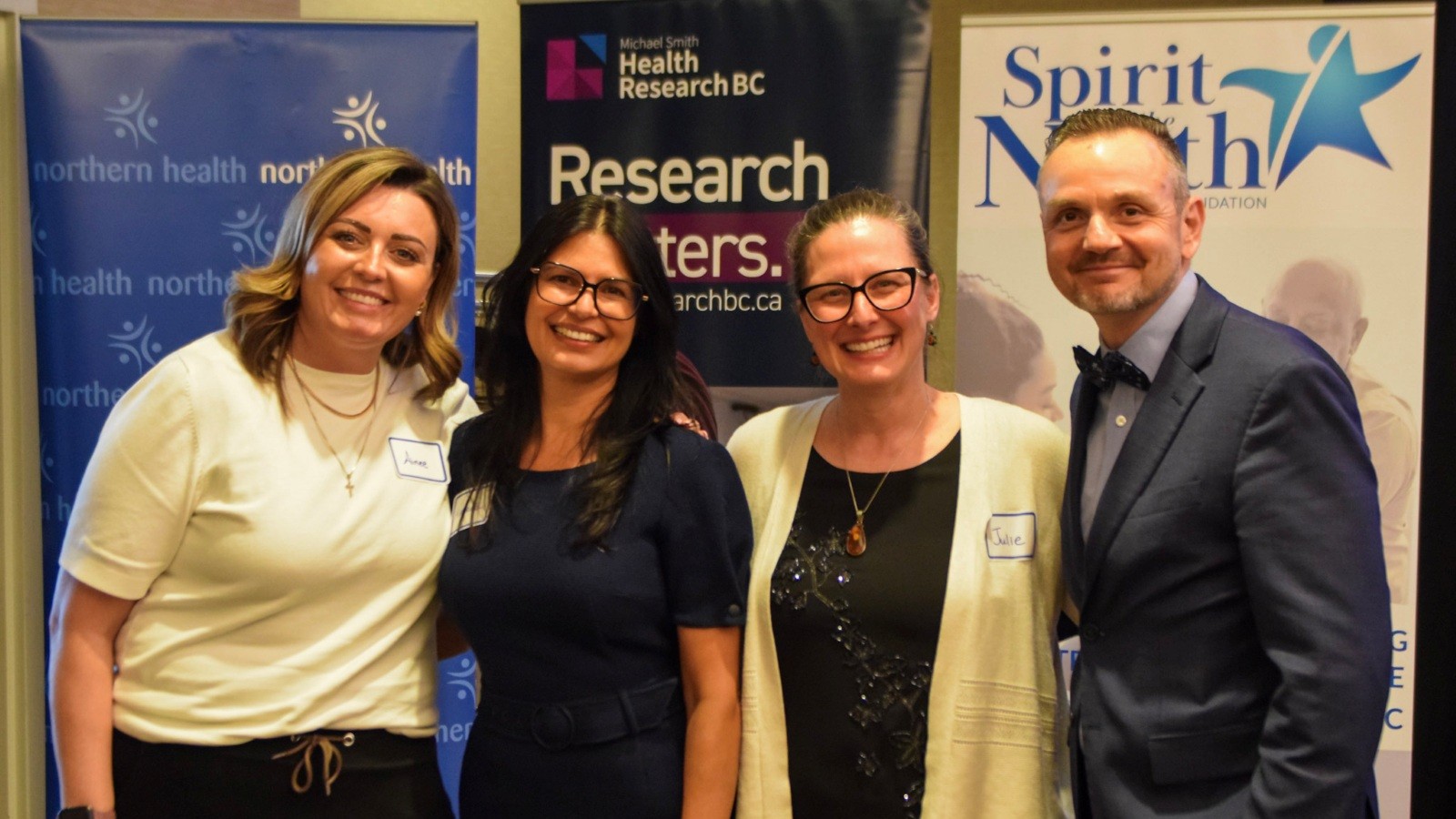
An evening celebrating health research in Northern British Columbia kicked off a new funding opportunity that addresses healthcare priorities in the region.
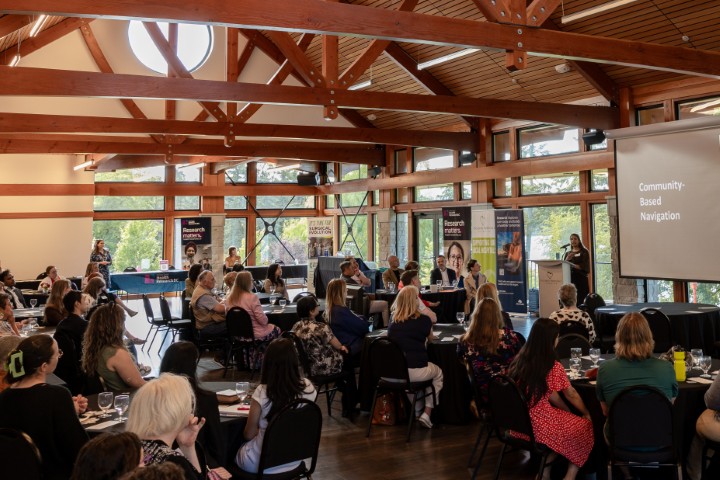
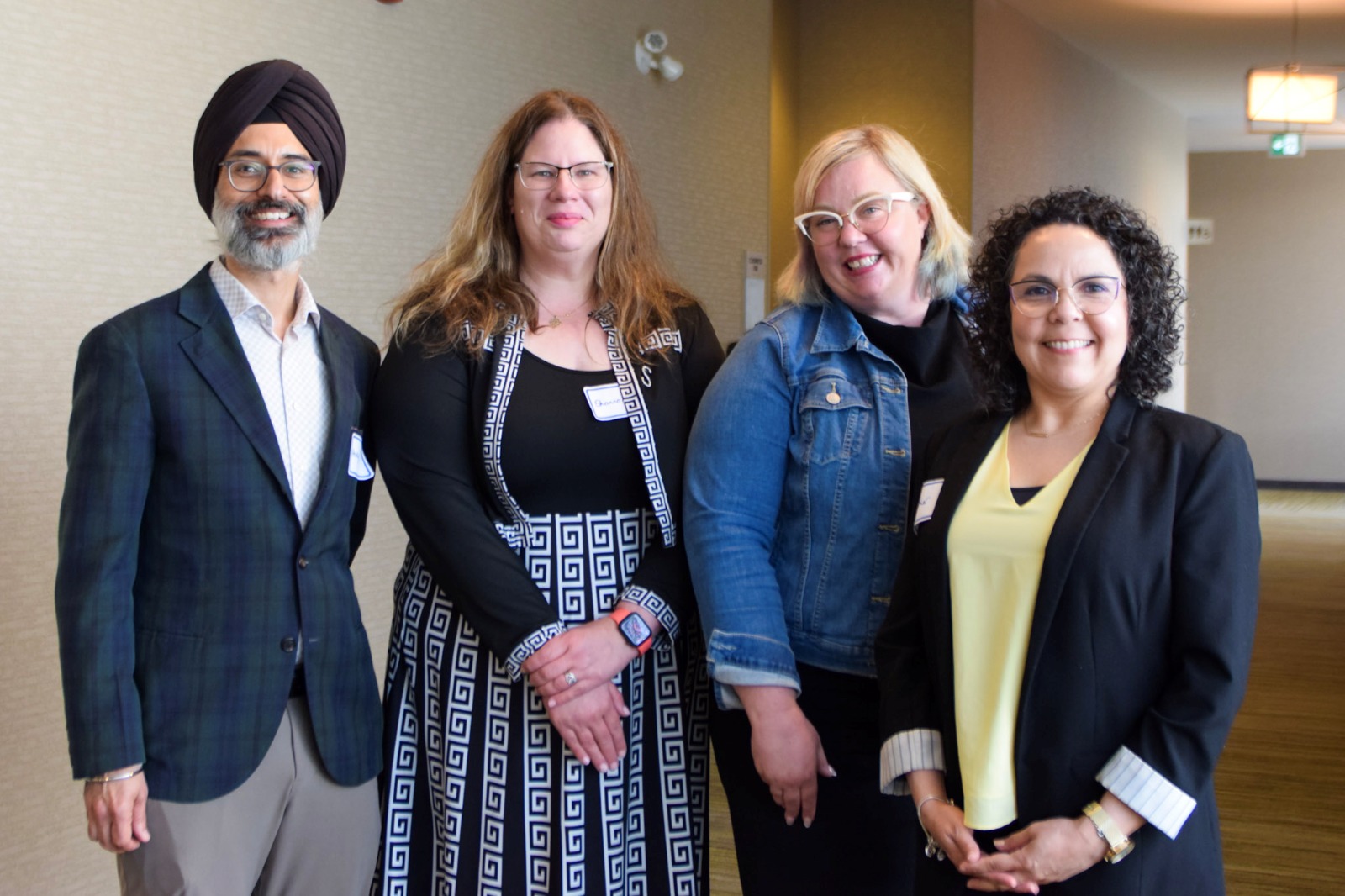
Researchers, clinicians, lived experience partners, and supporters gathered in Prince George on May 28 for the Made in the North event, co-hosted by Northern Health, Michael Smith Health Research BC, and the Spirit of the North Healthcare Foundation.
“The real power behind all of these researchers is partnerships and relationships,” said Dr. Geoff Payne, President & CEO, Health Research BC. “We’re seeing exciting work happening across the North — from expanding hybrid models of care, to supporting healthier aging and community-based care, to strengthening opportunities for people in Northern communities to participate in research closer to home.”
Four health researchers spoke about their work, encouraging others in the room to think about what they could accomplish with support from the new Northern Research to Results Competition (NR2). It is a funding opportunity focused on Northern BC’s healthcare priorities, awarding up to $100,000 to a project that can improve care for patients and communities within two years.
Discover how Michael Smith Health Research BC-supported speakers are advancing research and improving health across Northern BC.
Expanding hybrid care and advancing clinical trials in Northern BC
Dr. Anurag Singh, Director, Northern Centre for Clinical Research, shared how virtual care and hybrid solutions can improve care for patients with kidney disease living in northern and rural communities.
In Northern BC, long distances between home and the specialist clinic can mean delays in diagnosis and treatment, with some people living a 12-hour drive from the nearest kidney specialist.
Anurag is leading the first international clinical trial from Northern Health evaluating a new treatment for kidney disease and heart problems. It enables Northern BC patients to participate in international research without leaving the region.
Supporting care for seniors
Dr. Esther Alonso Prieto, Lead, Northern Health Ethics Service, created a framework to help healthcare workers deal with complex and morally challenging situations when caring for seniors living in the community.
Care providers are often trying to find the best way forward that honours seniors’ dignity, safety, autonomy and relationships all at once. But these values can be difficult to reconcile, leading to ethical tensions, competing obligations, and experiences of moral distress that may ultimately compromise provider well-being and their capacity to deliver the best possible care.
Called the Moral Empowerment System for Healthcare (MESH), Esther’s team helps care providers build the tools and confidence to navigate those situations. The team recognizes that empowering those on the frontlines is essential to sustaining quality of life for older adults.
“If we don’t support those who provide care, there is no amount of technology, or money, or facilities that will lead to the type of care our seniors deserve,” Esther says. “We need to support healthcare providers so that, ultimately, we advance seniors’ care.”
Esther’s work is one of five projects supported through Health Research BC’s Advancing the Use of Evidence in Seniors’ Home and Community Care program. The program represents a $6.3 million commitment to support research teams incorporating lived experience to implement proven approaches in seniors’ care. The program’s intent is to help older adults live comfortably at home, stay connected, and live healthier, more independent lives.
Improving cardiac care through patient-oriented research
Dr. Davina Banner-Lukaris studies how to improve health research by partnering with people with lived experience and community organizations. She has worked across BC, nationally, and internationally to explore how to promote authentic and meaningful engagement in research, including how to engage populations that are typically excluded from health research and clinical trials.
She drew on experience partnering with community organizations that support newcomers and people dealing with homelessness to better incorporate diverse voices for heart health in research and health system planning. She’s helped create patient-oriented research training, including educational materials for lived experience partners to take on leadership positions in health research.
“How we come together is really meaningful, and we can have impact,” Davina said. “When we re-think how we work together, we smash through those delays translating research into practice.”
Davina is a Professor at the University of Northern British Columbia, a Scientist with the Centre for Advancing Health Outcomes, and the Sex- and Gender-Based Analysis Champion with the BC SUPPORT Unit, part of Health Research BC. The BC SUPPORT Unit stewards federal and provincial funding to advance patient-oriented research.
Using technology to age better in Northern BC
Dr. Shannon Freeman’s work focuses on self-empowerment for older adults. She helps maintain living at home as a vibrant, dignified option for those staying in the communities they helped build.
She developed the Centre for Technology Adoption for Aging in the North (CTAAN) with support from Health Research BC, AGE-WELL, the University of Northern British Columbia, and Northern Health. The centre invites researchers and innovators to step out of the lab and into the community, providing a space where their technologies can be safely tested and refined by the people who actually use them. By bridging the gap between innovation and the front lines of care, it enhances local services to meet the unique needs of Northern life.
Apply to the Northern Research to Results Competition (NR2)
This new, partnered research competition was designed to support high-impact projects that address real healthcare challenges in northern and rural communities. The competition focuses on research that will be directly applied within the healthcare system and lead to meaningful improvements in Northern BC within two years.
The total award is up to $100,000.
Interested applicants should submit a letter of intent by November 13, 2026.
Apply now