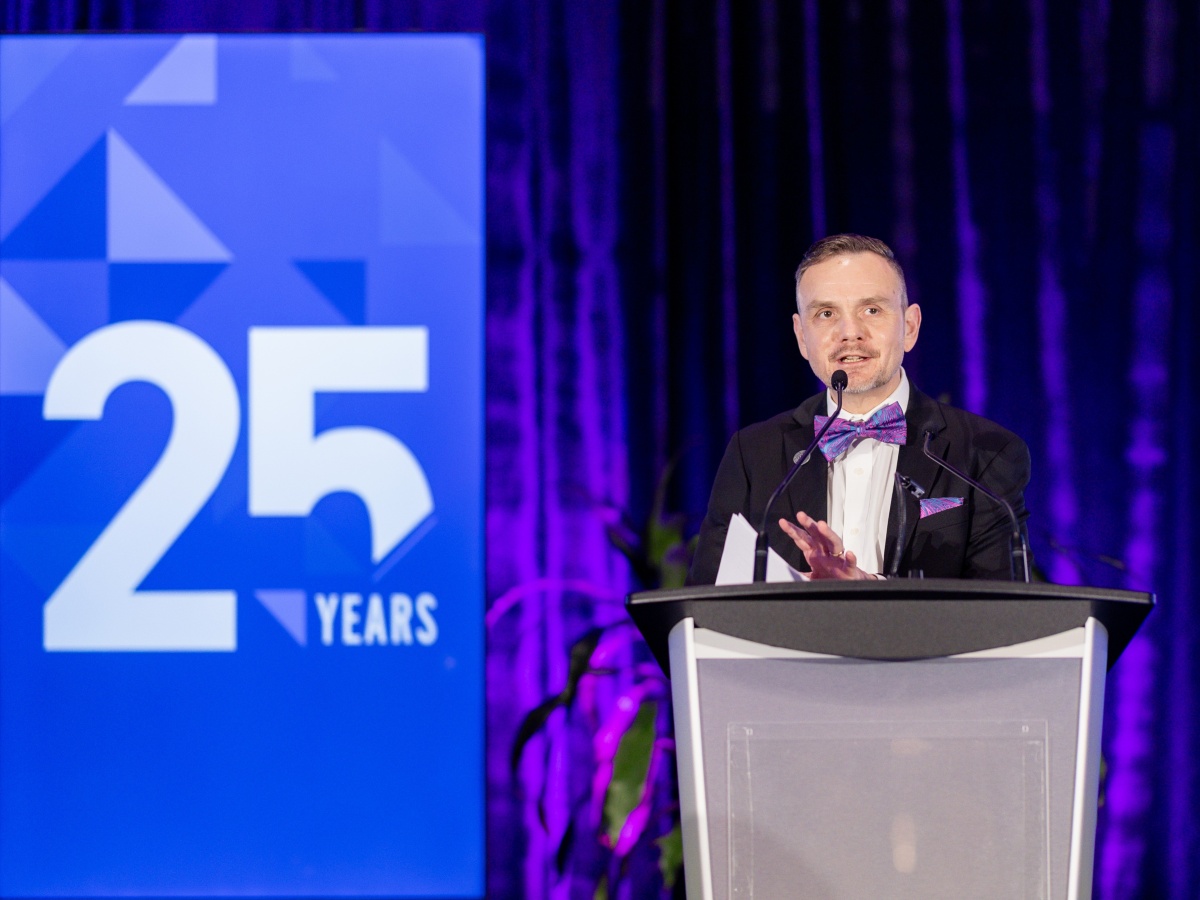
Dr. Geoff Payne, President & CEO, celebrates 25 years of Michael Smith Health Research BC, speaking to the crowd at the event.
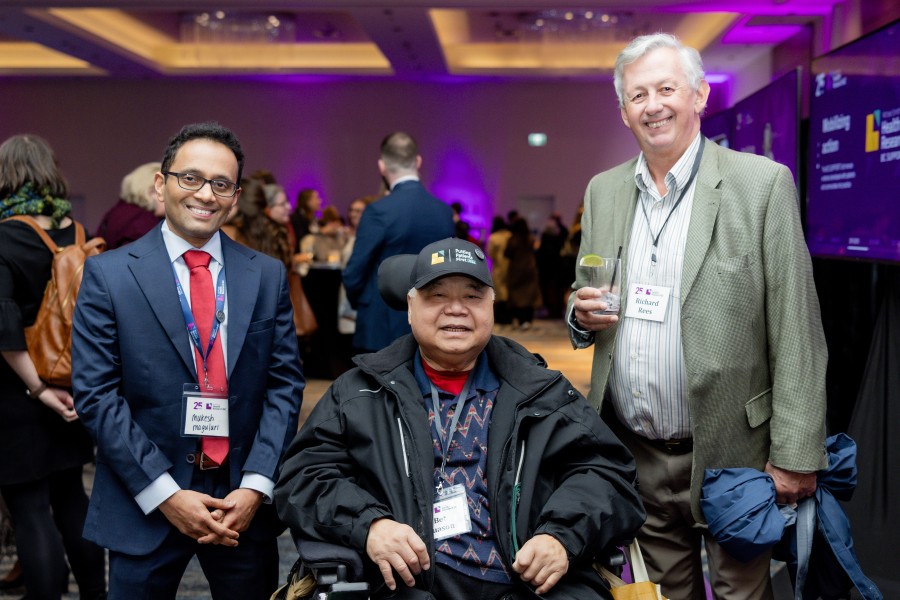
It was a night to remember as colleagues and friends from across the health research community joined us March 2 to celebrate 25 years of Michael Smith Health Research BC. The event was a reflection of our province’s vibrant research landscape, filled with the spirit of partnership and shared purpose.
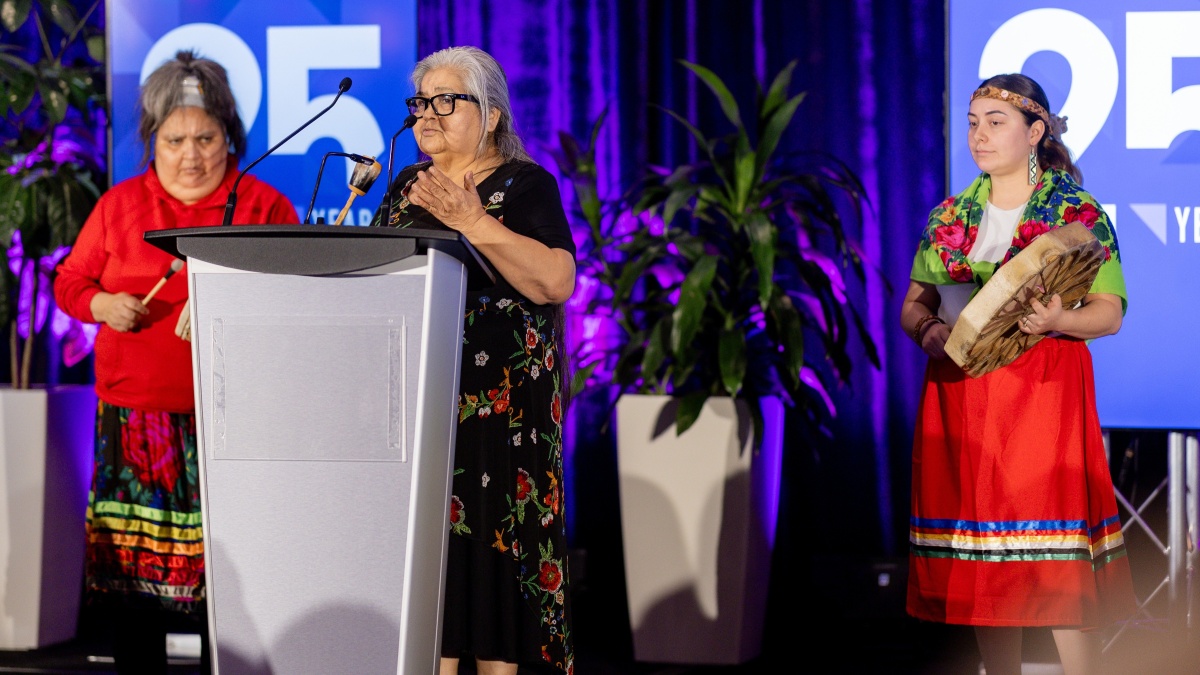
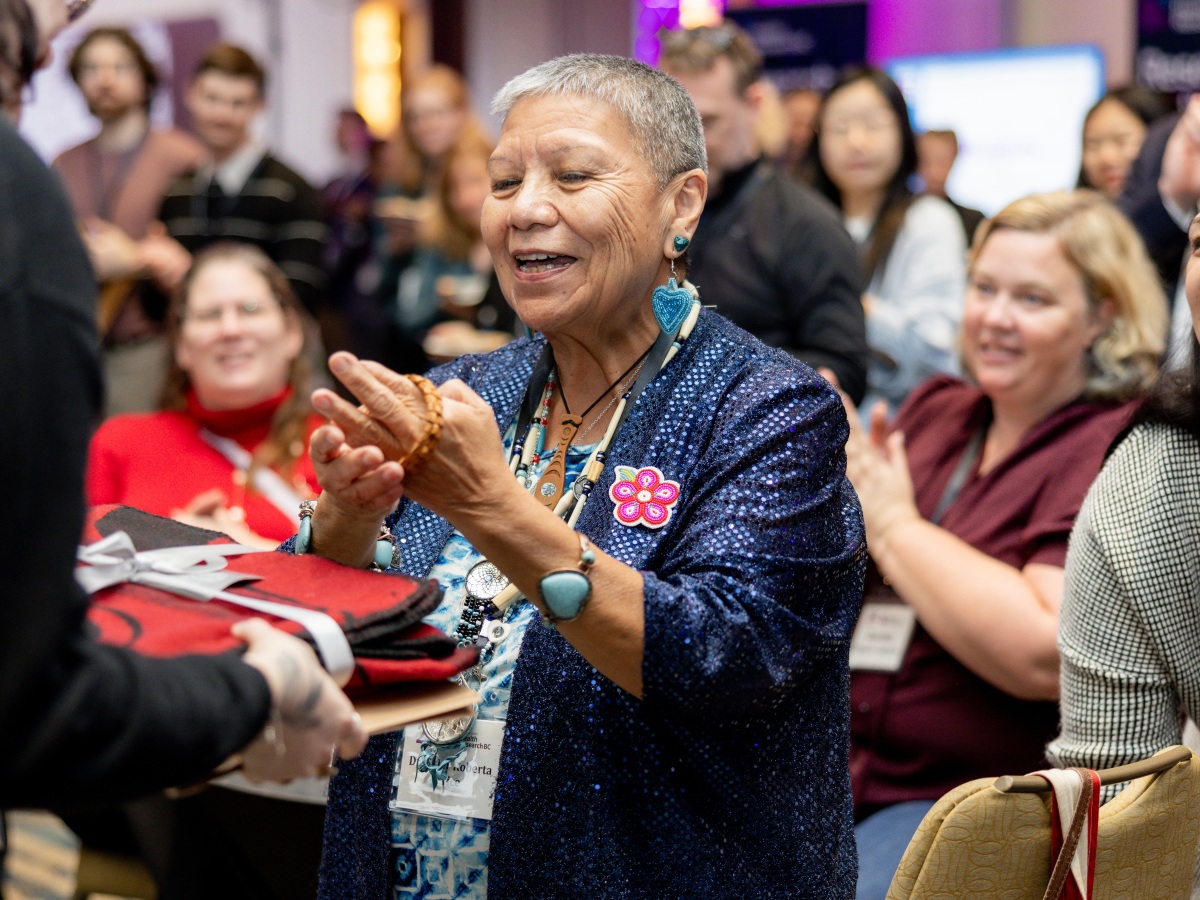
We were honoured to have Elder Kelly White, her daughter, Star, and Lana Arnold of the Musqueam Nation open our gathering. To share our gratitude for their guidance on our ongoing journey towards Indigenous reconciliation and cultural safety, we presented partners Harley Eagle, Cultural Safety Advisor, and Dr. Elder Roberta Price with traditional blankets and cedar bracelets, beautifully crafted by Knowledge Keeper Shona Sparrow of Moontide Reconciliation.
Dr. Geoff Payne, President and CEO, reflected on the impact and legacy of Health Research BC’s work over the past 25 years. He noted the strength of our province’s health research community, celebrating the researchers, people with lived experience, partners, care providers, and policy-makers who have helped shape what health research looks like in BC today.
“We’ve supported thousands of emerging researchers in BC. Some of you in this room received early-career support years ago and are now leading major programs, institutes, and companies. That continuity of talent is one of BC’s greatest strengths.”
— Geoff Payne, President & CEO
It was an honour to be joined by family members of Dr. Michael Smith, BC’s first Nobel laureate and the namesake of Michael Smith Health Research BC. We were also pleased to share a video message of welcome from the Honourable Josie Osborne, Minister of Health.
As we look towards the next 25 years, we remain focused on supporting research talent, strengthening the research system, and mobilizing action on priorities. Health research is more important than ever, and we will continue to invest in and strengthen the community that drives discovery forward.
Thank you to everyone who has been part of our journey so far. Here’s to the next quarter-century of discovery, collaboration, and impact.

Tonia later turned her attention to healthcare in prison settings. With support from a Scholar award, she led the development of a jail screening assessment tool. The tool helps corrections staff identify people in custody who may have complex mental health needs and refer them for further assessment and care. Then, through a Health Research BC Convening & Collaborating award, Tonia and her team identified gender-specific, trauma-informed, and culturally relevant approaches to address the disproportionate health burdens among people in custody.
During her postdoctoral work, Tonia also worked with an interdisciplinary team to co-develop a clinical guide that helps care providers assess a person’s risk for aggression and plan treatment. The guide has now been translated into 13 languages, adapted for adolescents, and used internationally to support patient care and public safety.
Tonia credits Health Research BC with helping to launch her career, moving from conducting individual studies to building a sustained program of research. The funding enabled her to present her work, build collaborations, and contribute to larger national projects — positioning her to compete successfully for major research funding.
“Both the Research Trainee and Scholar awards came at really critical junctures in my career,” she says. “The funding gave me the space and time to build an independent program of research and establish local, national, and international collaborations that continue to grow and strengthen.”
As her career progressed, that support extended beyond her own work. Tonia went on to mentor early-career researchers of her own, several of whom received Research Trainee awards from Health Research BC. She supervised Drs. Sarah Desmarais and Catherine Wilson, who contributed to the implementation and evaluation of the clinical guide for aggression risk. Today, Tonia is co-leading a $1.3-million Canadian Institutes of Health Research project grant with another former trainee, Dr. Amanda Butler. Together, they are evaluating a prison-based program in BC for people in custody living with addictions.
By training and mentoring early-career researchers, Tonia is helping to carry Health Research BC investment forward and strengthen the research community for the future.
“Training and mentoring the next generation of research leaders is a natural extension of that support, and it’s a responsibility I take very seriously,” she says. “Ensuring the opportunities I received translate into lasting impact for patients, communities, and the research system is how I honour that investment.”
Dr. Tonia Nicholls is Professor in the Department of Psychiatry in the Faculty of Medicine at the University of British Columbia (UBC) and Scientific Director, Forensic Research at BC Mental Health and Substance Use Services. She holds several cross-appointments, including at the UBC School of Population and Public Health and the Department of Psychology at Simon Fraser University. Tonia’s research examines the intersections of law and mental health related to the provision of services to persons in conflict with the law and diverse marginalized populations.
She has trained and mentored the following Health Research BC-funded trainees:[LE1]
Amanda Butler, University of British Columbia
Sarah Desmarais, University of British Columbia
Heather Palis, University of British Columbia
Catherine Wilson, University of British Columbia
[LE1]Do we want to include a list of trainees? Would be nice to recognize them. Checking with Nhan about whether we can do a call-out box.


Stay informed
Subscribe to our newsletter and follow us on LinkedIn and Bluesky.