
This casebook project is one of many featured in the lived experience in research road map resource, developed by the BC SUPPORT Unit. Explore the full set of casebook projects.
Partnering with parents in research and caring for children with medical complexity
Project team members include:
- Principal Investigator: Hal Siden
- Team Members: Laesa Kim, Candice Barrans, Anne-Mette Hermansen, Sharon Hou, Colleen Pawliuk, Gail Andrews
What is this project about?
In collaboration with CHILD-BRIGHT Network, the Canuck Place Child Hospice (CPCH) Research Initiative embeds parent partners as research staff and collaborators across all stages of pediatric palliative care research.
Since its inception, families have contributed to study design, leadership, and knowledge translation, ensuring research reflects lived experience and patient-identified priorities.
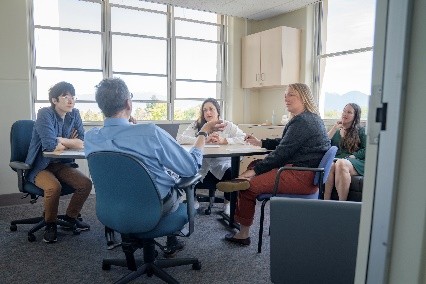
Parent partners are embedded members of the research team.
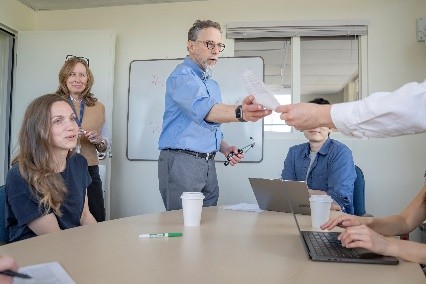
Guidance from parent partners supports research in a child’s best interests.
Who did you partner with for your project?
We partner with parents who have lived experience as…
- Caregivers to children with medical complexity.
- Advocates for families and communities.
How did partners with lived experience contribute during key stages of your research project?
Research stage
Throughout the project
How we partnered
As an embedded partner, Laesa Kim brings a lived experience lens across stages of research, from consultation to co-investigation.
She has led her own study to explore what motivates the parents of children with medical complexity to participate in research, shaping meaningful questions and approaches to data collection and analysis.
In her Family Liaison role, she connects with the Canuck Place Family Advisory Council to share and gather input on research activities.
Read more: Exploring what motivates parents of children living with medical complexity to participate in research.
Research stage
Knowledge translation
How we partnered
As an embedded partner, Candice Barrans leads the creation of our monthly research newsletter, TRENDS.
She reviews academic literature and collaborates with field experts to translate complex findings into accessible insights for clinicians and families. Her lived experience helps shape engaging and relevant knowledge-sharing approaches, including special family-focused editions.
Learn more: TRENDS in pediatric palliative care newsletter
Research stage
Throughout the project
How we partnered
Family Liaison Candice Barrans contributed to a scoping review on parent engagement and authorship in research, partnering with project leads Anne-Mette Hermansen and Colleen Pawliuk.
This collaboration led to both an ongoing review and a published commentary that highlighted challenges in recognizing patient partner contributions in research literature.
Read more: Giving credit where credit’s due — recognition of patient partners in health research.
What’s your advice for someone who wants to collaborate with partners with lived experience?
Engage patient partners early and integrate them as staff or co-investigators with clear roles.
Their lived experience strengthens research questions, design, and interpretation. Meaningful partnership requires recognition, fair compensation, relationship-building, and training to support impactful contributions.
How can someone learn more about your project?
Visit these websites:
- Canuck Place Research
- Pediatric Palliative Care
- Pain & Irritability in Children with Health Complexity
Read a news article:
Acknowledgments and thanks
The project team would like to thank:
- Canadian Institutes for Health Research
- Michael Smith Health Research BC
- BC Children’s Hospital Research Institute (BCCHR)
- University of British Columbia
- Canuck Place Children’s Hospice Research Initiative
This project was collected as part of a casebook that demonstrates patient-oriented research in BC.
Explore the casebook